Optimizing Manila Supply Chains With AI Strategy
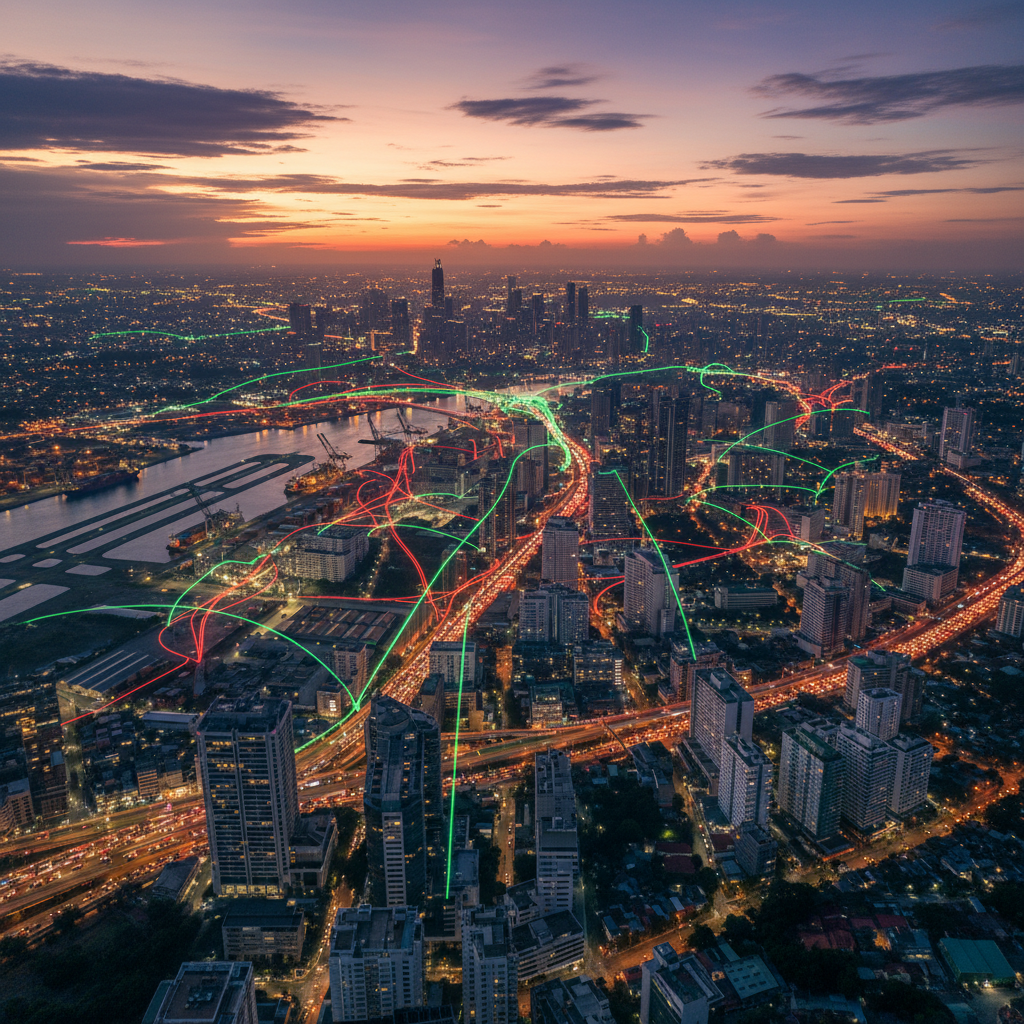
AI Advantages for Manila Logistics: AI combats Metro Manila's PHP 3.5 billion daily congestion costs by dynamically re-routing fleets away from chokepoints in the Port Area and Parañaque. It predicts demand spikes to automate dispatch, reducing cargo handling times by up to 40% and shifting operations from reactive firefighting to predictive revenue protection.
The Invisible Bleed in Your Supply Chain
The Logistics industry is currently suffering from an invisible bleed caused by Metro Manila's unpredictable infrastructure. It is not just about traffic; it is about data blindness. While your dispatchers are manually calculating routes, AI-enabled competitors are already predicting the next bottleneck before it forms.
In a landscape where logistics costs consume 27.5% of the Philippines' GDP—the highest in the ASEAN region—staying with traditional methods is no longer a conservative choice. It is a liability. The difference between profit and loss now lies in your ability to be visible to the algorithms that control search and discovery.
By The Numbers: The Cost of Inaction
- PHP 3.5 Billion: The daily economic loss Metro Manila suffers due to traffic congestion (JICA, 2024).
- 40% Faster: AI-driven cargo management technologies have been shown to reduce handling times by nearly half compared to manual sorting.
- 89% Adoption: The percentage of Filipino business leaders planning to integrate AI agents into their teams by 2025, signaling a massive shift in competitive standards.
Why Generic AI Fail in Manila (The Ghost Way)
Many businesses make the mistake of relying on generic, "out-of-the-box" AI tools. We call this "The Ghost Way." These systems might work in efficient Western grids, but they fail in the chaotic reality of Manila.
A generic AI tool sees a road in the Port Area and assumes it is passable. It does not know that a specific street in Intramuros is flooded due to a localized squall, or that a truck ban is active in Pasig during specific hours.
To capture the market, you need Entity-First Linking. Your digital footprint must connect your services directly to local landmarks like the Philippine Ports Authority or major hubs like the NAIA Logistics Center. This teaches search engines that you are not just a logistics company; you are a Manila logistics authority.
The Evolution of Freight Strategy
We break down the shift in operational hierarchy below. The goal is to move from human-dependent limits to AI-assisted dominance without losing local context.
| Feature | The Old Way (Human Only) | The Ghost Way (AI Only) | The LocalEnhance Way (Hybrid) |
|---|---|---|---|
| Routing | Reactive. Driver guesses based on memory. | efficient, but ignores local context (floods, coding). | Predictive. Adjusts for local Manila patterns & real-time data. |
| Dispatch | Manual phone calls and Excel sheets. | Automated but impersonal; alienates clients. | Smart Automation. AI handles routine; humans handle exceptions. |
| Visibility | Invisible to search engines. | Generic keywords; low conversion. | Entity-Optimized. Ranks for "Cold Storage Parañaque" queries. |
Future-Proofing Your Territory
The battle for logistics dominance in the Philippines is shifting to the digital realm. When a B2B procurement officer asks an AI search engine for a "reliable freight forwarder near Laguna Technopark," who does the AI recommend?
If your business is not optimized for these Generative Engines, you do not exist. You are protecting your trucks with insurance, but you are failing to protect your revenue from the digital shift. We diagnose these gaps and build the bridge between your physical fleet and your digital authority.
Ready to future-proof your business? Partner with LocalEnhance today.
Secure Your Revenue Now